
We have eaten our way across France, from the bustling bistros of Paris to tiny, family-run auberges within the countryside, and we’ve learned one easy truth: French cuisine is greater than just food. It’s a language of its own, a lifestyle woven into the material of each village, city, and residential. It’s the ritual of a morning croissant, the ceremony of a multi-course dinner, and the straightforward joy of an ideal baguette.
This isn’t just a listing of traditional French foods. This is our guide to the dishes we dream about, those we order the moment we land, and the flavours that outline this incredible country.
We’ll share our personal stories, tips on where to search out one of the best versions, and the know-how to enable you to navigate the menus with confidence. Prepare to taste the highest of French cooking.
Before You Eat: Understanding French Dining Culture
1. French Onion Soup (Soupe à l’Oignon)
We once ducked right into a tiny bistro in Le Marais on a miserably cold, rainy Parisian afternoon. The moment a steaming bowl of soupe à l’oignon was placed in front of us, the day was saved. The aroma of wealthy beef broth and caramelized onions is pure comfort.
- What It Is: A wealthy, savory soup constituted of beef stock and onions slowly caramelized until deeply sweet. It’s served in a ceramic bowl, topped with a thick crouton and a bubbling, golden crust of Gruyère cheese.
- Pro Tip: An important onion soup has a deep, dark broth, which suggests the onions were cooked low and slow for hours. If the broth is pale, it’s a shortcut version.
- Where to Try: Classic bistros and brasseries throughout Paris, especially within the colder months.
2. Steak Frites
This is the unofficial national dish of each French brasserie. It’s easy, satisfying, and when done right, utterly sublime. Our favorite memory is of a late-night dinner in Montmartre, sitting at a sidewalk table, watching the world go by with a wonderfully cooked steak and a mountain of crispy fries.
- What It Is: A high-quality steak (often an entrecôte or bavette) pan-fried or grilled to your liking, served with a pile of frites (fries). It’s typically accompanied by a sauce, like a creamy peppercorn (au poivre) or a wealthy béarnaise.
- Know Your Cuisson (Doneness): Saignant (Rare), À point (Medium-rare – the French standard), Bien cuit (Well-done).
- Where to Try: Almost any brasserie or bistro in France. For a classic experience, try Le Relais de l’Entrecôte in Paris, which serves only steak frites.
3. Duck Confit (Confit de Canard)
The first time you experience a correct duck confit is a culinary revelation. We were within the Dordogne region, the heartland of duck country, and were served a leg of confit where the skin was so crisp it shattered like glass, revealing essentially the most succulent, fall-off-the-bone meat beneath.
- What It Is: A duck leg slow-cooked in its own fat for hours until incredibly tender. It’s then pan-fried or broiled until the skin is golden and crispy.
- Pro Tip: It’s traditionally served with pommes de terre sarladaises, potatoes sautéed in garlic and, you guessed it, more duck fat. Do not miss this pairing.
- Where to Try: The Southwest regions of France like Dordogne and Gascony are the epicenter, nevertheless it’s a staple on bistro menus nationwide.
4. Escargots de Bourgogne
Don’t be shy! For many, eating snails is a rite of passage in France. After all, if you consider classic French food, this involves the highest of your mind.
We were hesitant on our first trip, but one bite of that garlicky, parsley-infused butter and we were converted. Use the little tongs and fork, and have your bread able to mop up every last drop of the butter.
- What It Is: Plump Burgundy snails baked of their shells with a generous amount of garlic, parsley, and butter.
- How to Pronounce It: es-kar-goh duh boor-GOHN-yuh
- Perfect Pairing: A crisp white wine like a Chablis or a sparkling Crémant de Bourgogne to chop through the richness of the butter.
5. Boeuf Bourguignon

I’ll always remember the primary time we had a real Boeuf Bourguignon. We were driving through Burgundy in late autumn, the vineyards blazing gold and red, and stumbled right into a tiny auberge near Beaune. The air inside was thick with the scent of red wine and slow-cooked meat. It’s not only a beef stew; it’s a hug from the within out.
- What It Is: A testament to slow cooking and one among those famous French dishes you’ve gotten heard about. Tougher cuts of Charolais beef are braised for hours in a full-bodied local Burgundy red wine, together with pearl onions, carrots, button mushrooms, and a bouquet garni of herbs. The result’s impossibly tender beef in a wealthy, glossy sauce.
- Where to Try: Its native Burgundy. Look for restaurants that list it as a plat du jour. A key sign of an ideal version is a sauce that’s deep, dark, and coats the back of a spoon.
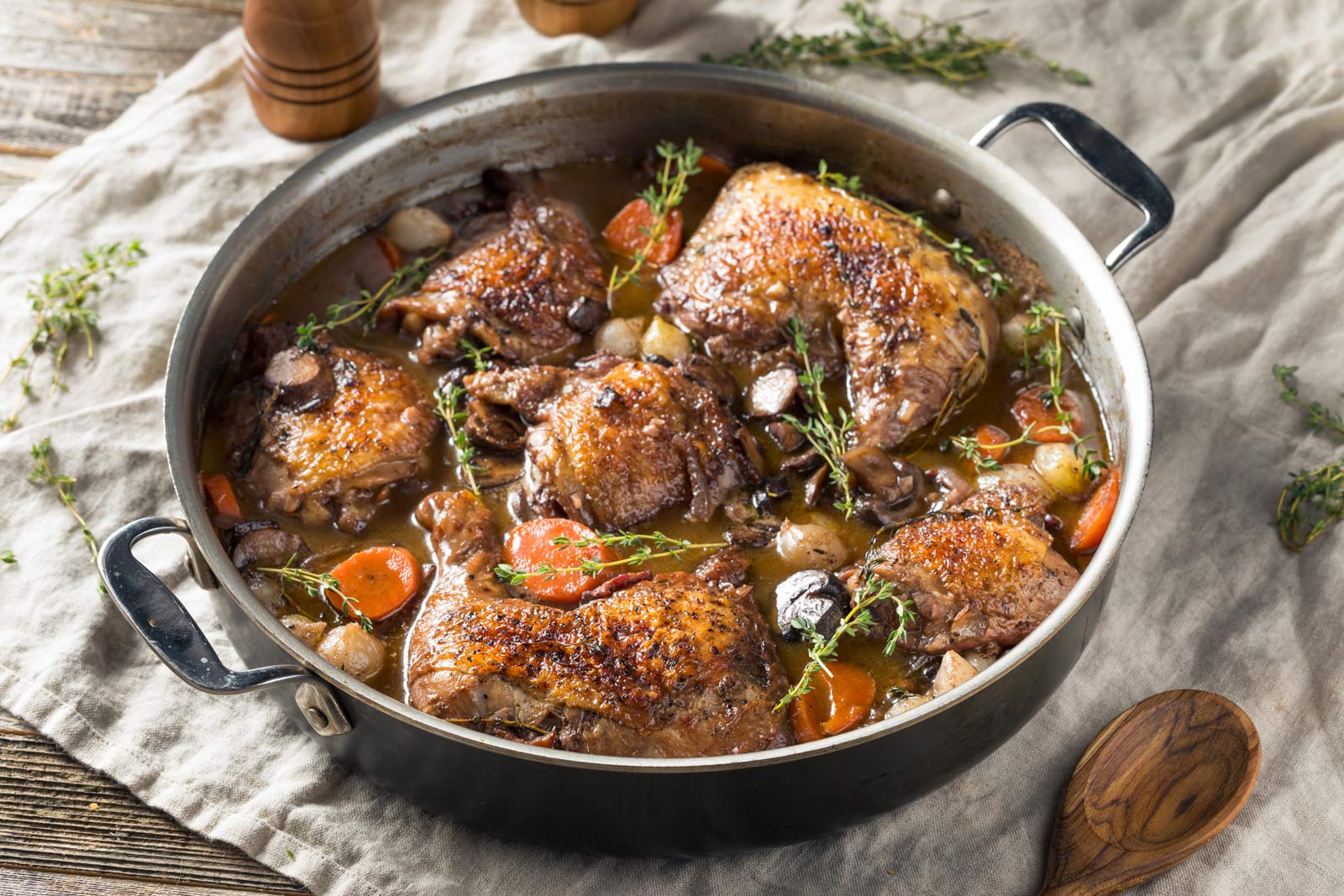
6. Coq au Vin
Like its beef-based cousin, Coq au Vin is one other iconic French stew. We had an unforgettable version in a conventional bouchon in Lyon, where the sauce was so dark it was almost purple, an indication of a really authentic, long-simmered recipe.
- What It Is: Chicken (traditionally an older rooster, or coq) braised slowly in red wine with lardons (bacon), mushrooms, and pearl onions. The long cooking time makes the chicken incredibly tender.
- How to Pronounce It: kok-oh-VAN
- Where to Try: Lyon is known for this dish, but you’ll find it in traditional restaurants across France.
7. Cassoulet

Be warned: cassoulet just isn’t a lightweight meal. It’s a wealthy, rib-sticking masterpiece. We shared one within the medieval city of Carcassonne and promptly needed to take a protracted, slow walk along the town partitions to get better. It was price each bite.
- What It Is: A hearty, slow-baked casserole from the Languedoc region containing white beans, duck confit, pork sausage, and sometimes other meats like pork shoulder. It’s traditionally cooked in a clay pot and has a delicious crispy crust.
- Where to Try: The cities of Toulouse, Carcassonne, and Castelnaudary each claim to have the one true recipe. Trying it anywhere on this region is a must.
8. Steak Tartare
Ordering steak tartare appears like joining a secret club. It’s a dish for purists, and we love watching the tableside preparation at old-school brasseries. If you trust the restaurant, you’re in for a treat.
- What It Is: High-quality raw beef, hand-chopped (never minced), and seasoned with capers, onions, mustard, and a raw egg yolk.
- Pro Tip: This dish is all concerning the quality of the meat. Only order it at a good, busy bistro where you may be assured of its freshness. If you’re unsure, ask if it’s prepared au couteau (cut by knife).
9. Bouillabaisse

Eating bouillabaisse within the Vieux-Port (Old Port) of Marseille, with the fishing boats bobbing within the harbour, is a quintessential French food experience. It’s not only a soup; it’s a two-course event.
- What It Is: An iconic fish stew from Marseille. An authentic version must contain at the very least 4 sorts of local rockfish. The fragrant, saffron-infused broth is served first with croutons and rouille (a spicy garlic mayonnaise), followed by the fish fillets themselves.
- Pro Tip: Real bouillabaisse is dear as a consequence of the standard and number of fish required. Be wary of low cost versions marketed to tourists.
- How to Pronounce It: boo-yah-BESS
10. Moules Frites
This Belgian classic has been wholeheartedly adopted by Northern France. There’s nothing higher than sitting at a seaside restaurant in Normandy or Brittany with an enormous steaming pot of mussels, a cone of salty fries, and a view of the ocean.
- What It Is: A generous portion of mussels, typically steamed in a broth of white wine, shallots, parsley, and garlic (marinières style). It’s at all times served with a side of fries.
- How to Eat It: Use an empty mussel shell as a pair of pincers to pluck the meat from the others.
11. Oysters (Huîtres)

The French coast, particularly Brittany and Normandy, produces among the world’s finest oysters. We love visiting the oyster market in Cancale, Brittany, where you may buy a dozen fresh-shucked oysters directly from the producers and eat them standing by the ocean with a squeeze of lemon.
- What It Is: Fresh, raw oysters, typically served on a bed of ice with lemon wedges and a mignonette sauce (chopped shallots in red wine vinegar).
- Where to Try: Coastal towns in Brittany and Normandy are best. In Paris, you’ll find them at dedicated seafood brasseries (écaillers), especially during months with an ‘R’ in them.
12. Coquilles Saint-Jacques
This is a wealthy, elegant dish often served as a starter for a special day. The creamy sauce and golden-brown top make it pure indulgence.
- What It Is: Plump sea scallops, often poached in a wine-infused cream sauce with mushrooms, then placed back right into a shell, topped with cheese or breadcrumbs, and browned under a grill.
- Where to Try: A classic on menus in Normandy, the center of France’s scallop fishing industry.
13. Sole Meunière
Simple, elegant, and timeless. This dish, famously loved by Julia Child, proves that with perfect ingredients and technique, you don’t need complicated recipes to create something magical.
- What It Is: A complete Dover sole, evenly dusted in flour, pan-fried in butter until golden, and served with a sauce of browned butter (beurre noisette), lemon juice, and fresh parsley.
- Perfect Pairing: A crisp, unoaked Chardonnay like Chablis.
14. Quiche Lorraine

The quintessential French savory tart. It’s perfect for a lightweight lunch or a picnic.
- What It Is: A wealthy, open-faced tart with a pastry crust crammed with a savory custard of eggs, cream, and smoky lardons (bacon).
- Where to Try: Originally from the Lorraine region, but present in every boulangerie and traiteur (deli) across France.
15. Crêpes & Galettes

We spent every week in Brittany, the birthplace of the crêpe, and ate them almost day by day. They are incredibly versatile and delicious.
- What It Is: Crêpes are thin pancakes constituted of wheat flour and are typically served with sweet fillings (sugar, Nutella, fruit). Galettes are from the identical family but are made with savory buckwheat flour and crammed with things like cheese, ham, and eggs (une complète).
- Pro Tip: In Brittany, they’re traditionally served with a bowl of local dry cider.
16. Croque-Monsieur & Croque-Madame

This is the last word French grilled cheese sandwich. It was our go-to lunch on busy sightseeing days in Paris; quick, inexpensive, and incredibly delicious.
- What It Is: A hot sandwich made with baked ham and Gruyère cheese on pain de mie (soft white bread), topped with creamy béchamel sauce and more cheese, then broiled until bubbly. A Croque-Madame is similar but with a fried egg on top.
- Where to Try: Any corner café or brasserie at lunchtime. It’s the proper partner for an easy green salad with a pointy vinaigrette.
17. A Beginner’s Guide to French Cheese (Fromage)
With over 1,000 sorts of cheese, knowing where to begin is daunting. A cheese course is often served after the primary course and before dessert. These are our favourite French cheeses:
- Comté: A tough, nutty cheese from the Jura mountains.
- Roquefort: A robust, salty blue cheese constituted of sheep’s milk.
- Chèvre (Goat Cheese): Comes in lots of forms, from soft and fresh to hard and aged. Look for Crottin de Chavignol from the Loire Valley.
- Camembert: A soft, creamy, and earthy cheese from Normandy. Let it come to room temperature before eating.
- Brie de Meaux: The famous “King of Cheeses,” soft-ripened with a light, buttery flavour.
Cheese Plate (Fromages AOP). Start with Comté (Jura), Camembert de Normandie (Normandy), Sainte-Maure de Touraine (Loire goat’s cheese), and Saint-Nectaire (Auvergne). Ask for cheeses “à point” (ripe). Note: the baguette, now on UNESCO’s Intangible Cultural Heritage list, really is half the enjoyment.
18. Charcuterie (Pâté, Terrine, Rillettes)
A charcuterie board is a celebration of preserved meats.
- What It Is: A platter featuring a wide range of cured meats and preparations.
- Pâté & Terrine: A combination of ground meat (like pork, veal, or duck), fat, and seasonings, cooked in a mold. A terrine is known as for the dish it’s cooked in, while a pâté en croûte is baked in a pastry crust.
- Rillettes: Meat (normally pork) slow-cooked in its own fat until it’s shreddable, then cooled to form a wealthy, savory spread.
- How to Eat It: Spread it on a bit of fresh baguette and serve with cornichons (tiny pickles) and Dijon mustard.
19. Salade Niçoise

This just isn’t only a salad; it’s an entire meal in a bowl, filled with the fresh flavours of the French Riviera.
- What It Is: A composed salad from Nice featuring tomatoes, green beans, hard-boiled eggs, olives, and anchovies or tuna.
- Good to Know: An authentic Niçoise salad doesn’t contain cooked potatoes or lettuce, but many modern versions include them.
20. Ratatouille

A gorgeous summer vegetable stew that tastes of the Provence sun. It’s excess of the straightforward dish from the movie.
- What It Is: A vibrant stew of eggplant, zucchini, bell peppers, onions, and tomatoes, slow-cooked with garlic and herbs. Each vegetable is usually cooked individually to keep up its texture and flavour before being combined.
- Where to Try: Provence, in the summertime, when the vegetables are at their peak.
21. Raclette & Tartiflette (The Alpine Experience)
These are the last word winter comfort foods, best enjoyed in a comfy chalet after a day of skiing within the French Alps.
- What They Are:
- Raclette: A big wheel of Raclette cheese is melted and scraped onto diners’ plates over boiled potatoes, charcuterie, and pickles.
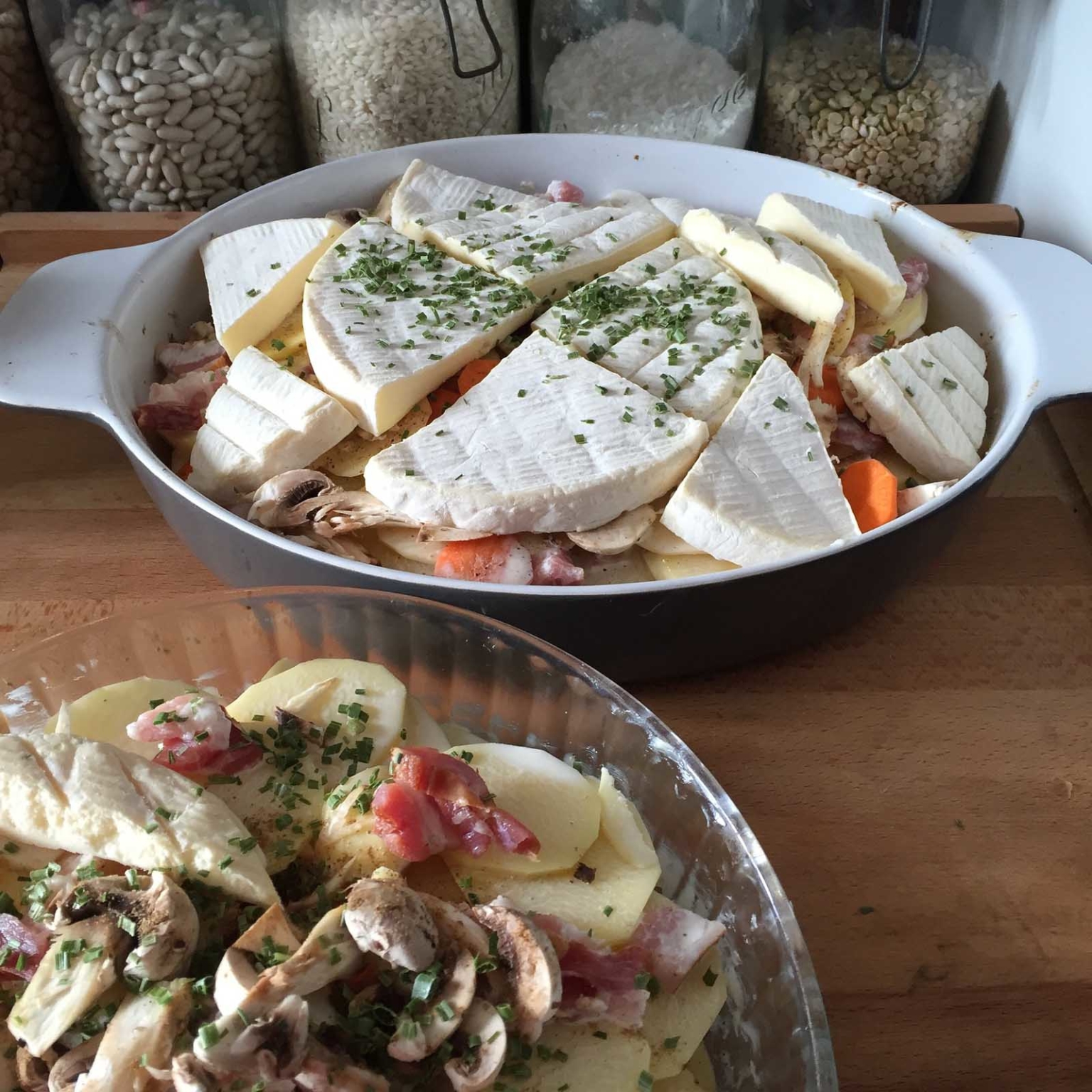
- Tartiflette: A ridiculously good casserole of sliced potatoes, lardons, onions, and a complete wheel of creamy Reblochon cheese baked on top until molten and golden.
22. Poulet Basquaise

This dish is a vibrant taste of the French Basque Country, with its sunny, daring flavours. It’s an exquisite one-pot meal that captures the region’s love for peppers and tomatoes.
- What It Is: Chicken pieces braised in a flavorful sauce of piperade, a mixture of onions, green peppers, and tomatoes sautéed with a touch of Espelette pepper for a delicate warmth.
- Where to Try: The French Basque Country within the southwest, near the Spanish border.
23. Foie Gras
A controversial but undeniably iconic French delicacy. We first tried it seared hot (poêlé) at a Christmas market in Strasbourg, served simply on gingerbread. It was unbelievably wealthy and melted in our mouths.
- What It Is: The specially fattened liver of a duck or goose. It could be served as a chilly terrine (mi-cuit) with toast and fig jam, or seared hot.
- Perfect Pairing: A sweet dessert wine like a Sauternes from Bordeaux or a Jurançon from the Southwest.
24. Aligot
Watching aligot being served is half the fun. This cheesy, stretchy potato dish is pure theatre. A server will lift a spoonful high into the air, making a seemingly infinite ribbon of molten cheese and potato.
- What It Is: Silky smooth mashed potatoes blended with garlic and Tomme de Laguiole or Cantal cheese, whipped until it develops an incredible, elastic texture.
- How to Pronounce It: ah-lee-GOH
- Where to Try: A specialty of the Aveyron and Auvergne regions in central France. It’s often served with local sausages.
From the Bakery: Pastries & Desserts
No trip to France is complete without each day visits to the local bakery (boulangerie) and pastry shop (pâtisserie). This is where you’ll find the straightforward, iconic flavours that outline French life.
25. Baguette Tradition
The French baguette is a cultural icon. Our each day ritual in France is to search out one of the best local boulangerie and grab a warm baguette de tradition for the day.
- What It Is: A protracted, thin loaf of bread with a crisp crust and a soft, airy crumb. A “Tradition” is made with only flour, water, yeast, and salt, protected by French law.
- Pro Tip: Look for bakeries with the “Artisan Boulanger” sign. An excellent baguette must have an irregular, open crumb and a deeply golden, crackly crust. It was given UNESCO Heritage status in 2022.
26. Croissant & Pain au Chocolat
The smell of baking butter is the perfume of a French morning. A correct croissant ought to be flaky, light as air, and leave a pleasant mess of crumbs throughout your plate.
- What It Is: A laminated pastry, meaning it’s made with countless paper-thin layers of dough and butter. A pain au chocolat is similar dough wrapped around two sticks of dark chocolate.
- Pro Tip: Avoid pale, doughy-looking croissants. An important one is deep golden-brown and has clearly defined layers.
27. Macarons
These delicate, jewel-like almond meringue cookies are a world away from the coconut macaroons you is perhaps used to. We love sampling the inventive seasonal flavours on the famous Parisian patisseries.
- What It Is: Two light-as-air almond meringue shells sandwiching a flavorful filling like ganache, buttercream, or jam.
- Where to Try: Pierre Hermé and Ladurée are essentially the most famous in Paris, but many local patisseries have excellent versions.
28. Tarte Tatin
A comfortable accident. This upside-down caramelized apple tart was created by the Tatin sisters within the nineteenth century once they supposedly overcooked the apples and tried to salvage the dish by putting the pastry on top.
- What It Is: Apples caramelized in butter and sugar until dark and sticky, then baked under a layer of pastry. It’s inverted before serving.
- How to Eat It: Served warm, often with a dollop of crème fraîche or a scoop of vanilla ice cream.
29. Crème Brûlée
The satisfying crack of the caramelized sugar topping is one among the nice joys of French desserts. It’s a classic for a reason.
- What It Is: A wealthy, creamy vanilla custard base with a contrasting layer of hardened, brittle caramelized sugar on top.
- Pro Tip: The top ought to be thin and shatter easily with a spoon. The custard underneath ought to be cool and silky smooth.
Tips for Gluten-Free Travellers in France
While France is bread-and-pastry heaven, eating gluten-free could be very manageable.
- Focus on naturally gluten-free dishes like grilled meats and fish (grillé), seafood platters, ratatouille, and most salads.
- Buckwheat galettes (galettes de sarrasin) are your best friend—they’re naturally gluten-free and delicious.
- Carry a French Celiac dining card (carte de régime coeliaque) to obviously communicate your needs. Simply stating “sans gluten” (without gluten) can also be very effective.
To truly know France, you should eat your way through it. Be adventurous. Try the dish you may’t pronounce. Trust the waiter’s advice. Every meal is a chance for discovery, a probability to attach with the culture, the land, and the people. Bon appétit!
Frequently Asked Questions about French Food
While it’s hard to narrow down, five of essentially the most iconic and essential French foods are Boeuf Bourguignon for its rustic history, the Croissant for its baking artistry, Steak Frites as the last word bistro meal, Bouillabaisse representing the Mediterranean coast, and Crème Brûlée for its universal appeal as a classic dessert.
A standard multi-course meal follows a particular structure. It often starts with an apéritif (a pre-dinner drink with small bites), followed by an entrée (starter), a plat (primary course), then a cheese course (fromage), and at last a dessert. Coffee will likely be served after dessert, not with it. This structure is more common for special occasions or weekend meals.
It is becoming more so, nevertheless it requires some navigation. Classic French cuisine is heavily meat- and fish-based. However, you’ll find excellent vegetarian options like Ratatouille, vegetable tarts (tartes aux légumes), Aligot, cheese plates, and salads (you should definitely order a Salade Niçoise sans thon). Many modern restaurants, especially in larger cities, now have dedicated vegetarian menus. Always be clear when ordering: “Je suis végétarien/végétarienne.”
Paris is a melting pot of French cuisine, nevertheless it’s particularly famous for its bistro and brasserie culture. The quintessential Parisian foods are Steak Frites, French Onion Soup, Croque-Monsieur, Duck Confit, and street-side crêpes. It’s also the worldwide capital of pâtisserie, so classics like Macarons, Croissants, and Paris-Brest are at their best here.
Escape the ordinary and discover the extraordinary! From bustling cities to serene landscapes, every journey begins with a single step—let us guide yours. Enjoy curated itineraries, hidden gems, and hassle-free bookings designed for explorers at heart. Whether it's a weekend getaway or a globe-trotting adventure, your Next unforgettable experience is just a click away.