
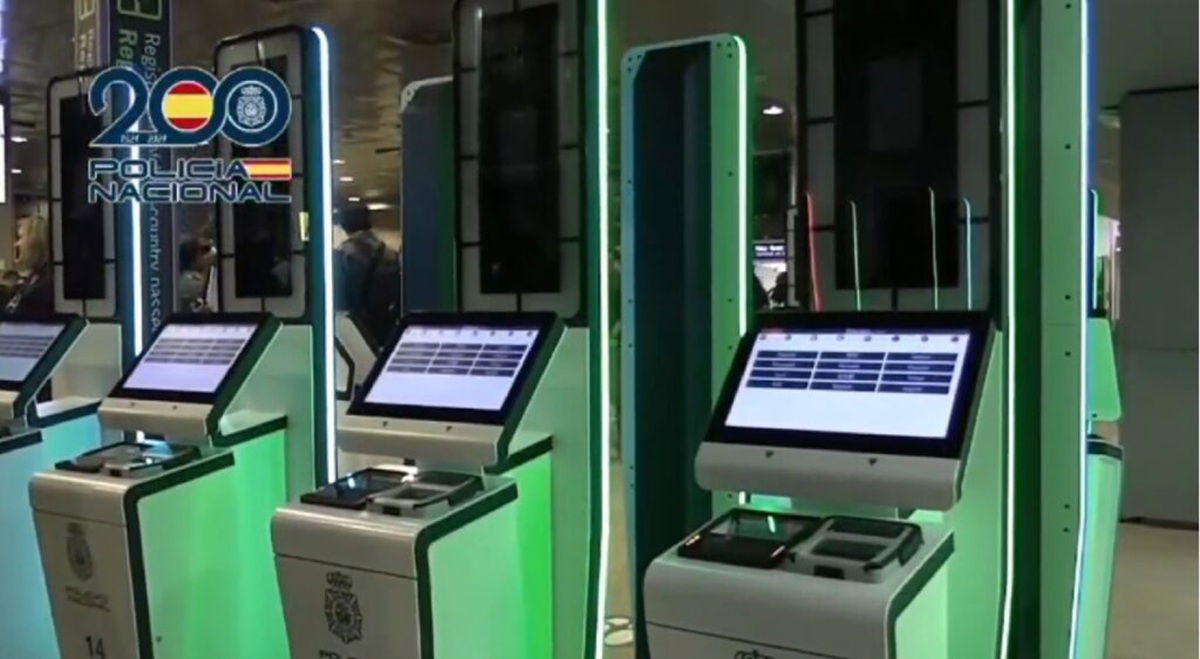
New biometric EES border control machines tested in Spain as full rollout is postponed.
Credit : X – @interiorgob
If you’re travelling to Spain from outside the EU anytime soon, here’s something value knowing. The European Union has delayed the total rollout of its latest biometric Entry/Exit System (EES) until September 2026, after concerns that introducing it too quickly could cause serious delays at airports in the course of the busy summer travel period.
The system has already been tested in several locations, including Spanish airports, but early feedback suggests border checks can take longer than expected. Rather than risk overcrowded terminals and frustrated passengers during peak holiday months, EU officials opted to decelerate the timeline and permit countries more time to organize.
For travellers, the immediate impact is fairly easy: it’s possible you’ll notice a mixture of old and latest border procedures over the following few months, depending on where you arrive and the way busy the airport is.
What the brand new Entry/Exit System is supposed to do
The Entry/Exit System is designed to modernise border control across the Schengen area. Instead of passport stamps, non-EU travellers will eventually have their entry and exit recorded through biometric data – mainly fingerprints, facial images and digital timestamps.
In theory, this could make border monitoring more accurate and help authorities robotically detect overstays. It’s also a part of a wider effort to digitise travel procedures across Europe.
But large-scale systems rarely roll out perfectly from day one, and that has been reflected within the early testing phase. Several airports have reported longer processing times, especially during busy periods when passengers unfamiliar with the technology need extra guidance.
That doesn’t mean the system won’t work – just that implementing it across dozens of busy airports concurrently is proving more complex than expected.
Why airports pushed back against the unique timeline
Some of the strongest concerns have come directly from airports and aviation organisations. During testing, hubs equivalent to Málaga-Costa del Sol and Barcelona-El Prat noticed that border processing times increased noticeably at peak hours.
Lisbon Airport even paused using biometric kiosks after queues reportedly stretched for several hours, highlighting the sensible challenges of introducing latest procedures while maintaining passenger flow.
Industry representatives warned that excessive waiting times could create greater than inconvenience. If queues extend into operational areas, they’ll raise safety concerns, particularly in the course of the summer months when passenger numbers surge.
Faced with those risks, Brussels selected caution over speed. The delay gives member states extra months to regulate staffing levels, fine-tune software integration and run further stress tests before the system becomes fully mandatory.
What this implies for Spain’s airports and holidaymakers
For Spain, the postponement is something of a mixed blessing. Major airports are already well advanced in preparing for EES, with lots of of biometric kiosks installed and testing underway. However, smaller airports and ferry ports still need time to finish infrastructure upgrades and training.
Airlines are also affected. Eventually, carriers might want to confirm that passengers have accomplished their biometric registration before boarding certain flights – a process that continues to be experiencing technical hiccups.
All of this implies travellers should encounter a hybrid situation. Some airports will proceed using biometric kiosks, while others may revert to manual passport stamping when queues begin to construct.
From a passenger perspective, the experience may simply feel unpredictable. One trip might involve biometric registration, while the following could look very like traditional passport control.
The safest approach is to permit slightly additional time on the border, particularly if arriving during peak travel periods or through particularly busy airports.
The ripple effect on future travel rules
The delay also affects one other upcoming change travellers have been hearing about: ETIAS, the planned travel authorisation for visa-exempt visitors entering the Schengen area.
Because ETIAS relies on data collected through the Entry/Exit System, it can’t be fully introduced until EES is working across all member states. As a result, travellers who currently visit Spain with no visa won’t must apply for ETIAS until a minimum of 2027.
For many visitors, that’s welcome news. It means fewer immediate administrative changes and more time to grasp how the brand new system will work before additional requirements come into play.
A slower transition, but likely a smoother one
The delay doesn’t signal a change of direction. The Entry/Exit System stays a central a part of the EU’s long-term border strategy, and its rollout continues to be very much moving forward.
What the postponement really reflects is the truth of implementing major digital infrastructure in environments where timing, passenger flow and security all intersect. A rushed launch could have created way more frustration than a gradual transition.
For travellers heading to Spain, the important thing takeaway is just to remain flexible. Border procedures may evolve steadily moderately than changing overnight, and patience may very well be a part of the journey for some time.
In the top, the additional preparation time may prove helpful. A smoother rollout later could prevent the form of disruption that might need overshadowed the travel experience during considered one of Europe’s busiest tourism seasons.
Escape the ordinary and discover the extraordinary! From bustling cities to serene landscapes, every journey begins with a single step—let us guide yours. Enjoy curated itineraries, hidden gems, and hassle-free bookings designed for explorers at heart. Whether it's a weekend getaway or a globe-trotting adventure, your Next unforgettable experience is just a click away.