After 15 years of exploring the globe, a few of our most memorable adventures have been within the US National Parks. We’ve seen firsthand that attempting to create a single “ranked” list of those incredible places is an not possible task. The best park isn’t a number on an inventory; it’s the one which matches your personal travel style.
That’s what this guide is for. This isn’t our subjective rating. This is our curated guide, based on our firsthand experiences, to show you how to select the proper park for your next adventure. Whether you’re in search of epic hikes, family-friendly views, or a real wilderness escape, we’ve been there, and we’ll show you how to find your match.
Our Top Picks: The Best US National Parks at a Glance
If you’re short on time, listed below are the parks that we imagine offer essentially the most incredible experiences.
| National Park | State(s) | Best For |
|---|---|---|
| Yellowstone | WY, MT, ID | Wildlife and Geothermal Wonders |
| Zion | Utah | Epic Hikes and Canyoneering |
| Yosemite | California | Granite Cliffs and Waterfalls |
| Glacier | Montana | Alpine Scenery and Road Trips |
| Grand Canyon | Arizona | Awe-Inspiring Views and Geology |
| Olympic | Washington | Diverse Ecosystems, from Coast to Rainforest |
| Denali | Alaska | True Wilderness and North America’s Tallest Peak |
Map of the Best US National Parks
To show you how to visualize your next adventure, we’ve pinned all of the parks on the map below.
Best National Parks for Iconic Scenery
These are the parks which might be famous for a reason. They are titans of the American landscape which have captured the imagination of travellers for generations. While they draw big crowds, their scale and grandeur make them essential stops on any tour of the US national parks.
Yellowstone National Park, Wyoming

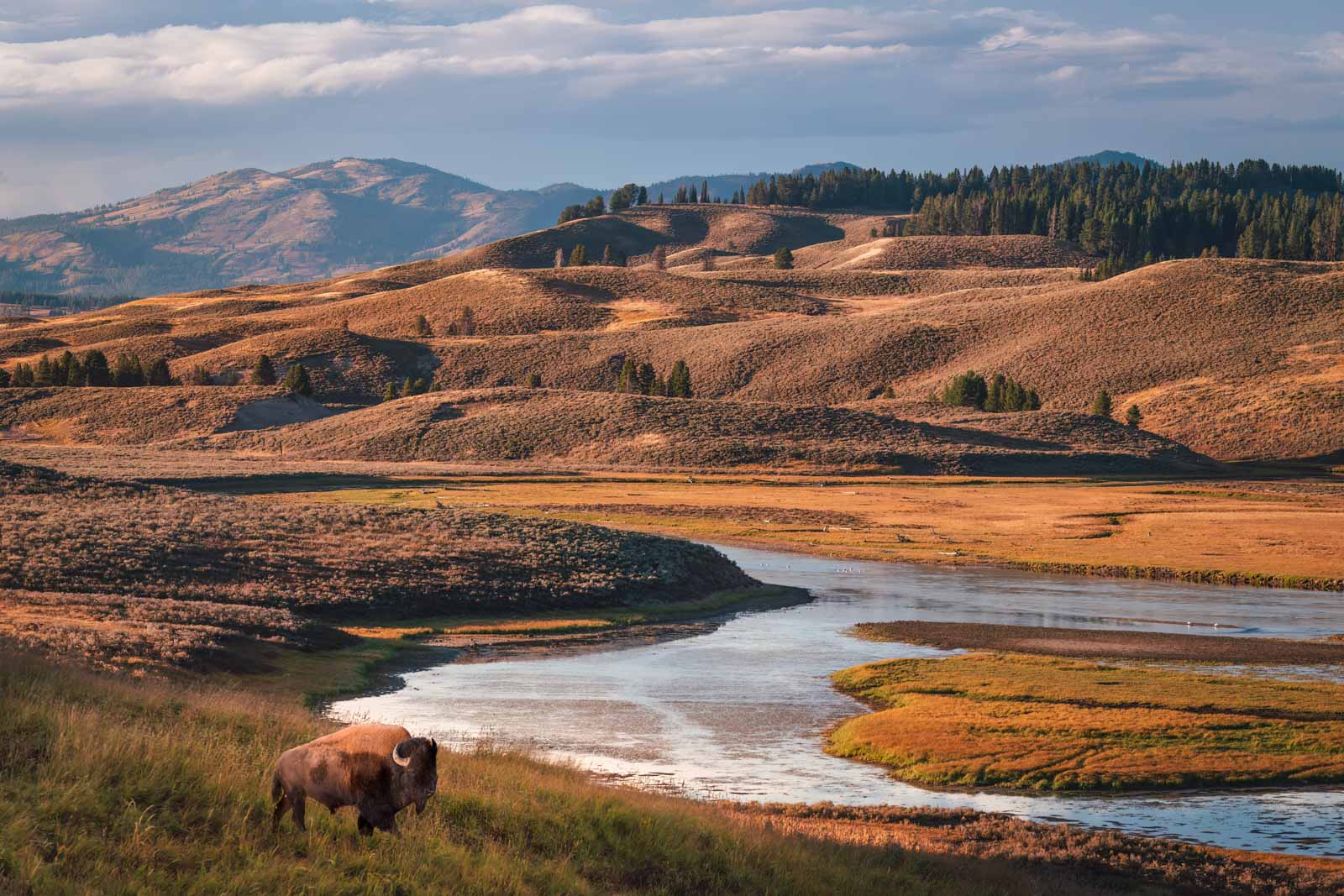
Yellowstone National Park is the primary national park within the United States, and whenever you visit, you understand why. It was also the world’s first National Park, and it seems like a landscape built to impress. With the planet’s largest concentration of geysers, bubbling mud pots, and an abundance of wildlife that roams freely, this park delivers a robust dose of untamed nature. We’ve returned to Yellowstone several times, and the sight of a bison herd moving across the valley never gets old.
- Best For: Wildlife viewing and geothermal wonders.
- Our Top Tip: To escape the largest crowds at Grand Prismatic Spring, take the short hike to the Grand Prismatic Overlook. You get a significantly better perspective of its incredible colors from above.
- When to Go: Spring and autumn offer fewer crowds and great wildlife spotting opportunities.
The park’s essential sights, just like the Grand Prismatic Spring and the Upper Geyser Basin (home to Old Faithful), are conveniently positioned along the Grand Loop Road. But it’s price pulling over within the Lamar and Hayden Valleys, where we’ve had our greatest luck spotting bison, elk, and even bears. For lodging, yow will discover several accommodation options throughout the park or in nearby towns like West Yellowstone and Gardiner.
Grand Canyon National Park, Arizona
The Grand Canyon is one in every of those places that really lives as much as its legendary status. To be honest, we didn’t expect it to have such an impact, however the moment we stood on the South Rim and looked out, it took my breath away. It felt like we were looking at a large, impossibly detailed photograph. The sheer scale is something you only can’t grasp until you’re there.
- Best For: Awe-inspiring views and understanding geological time.
- Our Top Tip: Stay for sunset. Find a spot along the Rim Trail away from the essential viewpoints, and watch the canyon colors change. It’s an experience you won’t forget.
- When to Go: March to May and September to November offer nice weather for hiking without the extreme summer heat.
Most visitors stick with the South Rim, which has the visitor centre, the Rim Trail, and access to scenic drives like Hermit Road and Desert View Drive. For the more adventurous, there’s whitewater rafting on the Colorado River far below or hiking partway into the canyon. Just keep in mind that hiking down is optional, but hiking back up is mandatory.
Yosemite National Park, California

For us, the dream of visiting Yosemite began in college with an Ansel Adams print. We bought a black and white photograph of Yosemite Valley and promised ourselves we’d go there at some point. When we finally made it, Dave spent hours recreating those iconic scenes together with his own camera. The park is a photographer’s dream, nevertheless it’s also a paradise for hikers and climbers.
- Best For: Granite cliffs, giant waterfalls, and world-class photography.
- Our Top Tip: The view from Tunnel View is known for a reason. Go within the late afternoon when the sunshine hits El Capitan and Half Dome good. It’s the classic scene for a reason.
- When to Go: Spring is improbable for waterfall viewing when the snowmelt is at its peak. Autumn provides beautiful color and fewer people.
Yosemite Valley is the guts of the park, where you’ll find the towering faces of El Capitan and Half Dome. There are countless hiking trails, from easy walks to strenuous backcountry treks. While it’s generally known as a mountaineering mecca, you don’t need to be a climber to understand the raw power of this landscape.
Zion National Park, Utah

Zion is the crown jewel of Utah’s “Mighty Five” national parks, and it’s easy to see why it’s one of the visited within the country. Its location near Las Vegas makes it a well-liked, though intense, day trip for those seeking to escape town. Unlike the Grand Canyon, which you view from the rim, Zion puts you right on the canyon floor, forcing you to look up at the large sandstone cliffs towering on either side. It’s a totally different and more intimate experience.
- Best For: Unforgettable hikes and unique canyon views.
- Our Top Tip: The park’s free shuttle is mandatory for accessing the essential canyon drive for many of the yr. Use it. It’s efficient and enables you to deal with the scenery as a substitute of trying to find parking.
- When to Go: Spring and autumn have essentially the most comfortable temperatures for hiking. Summer may be extremely hot.
Zion is a hiker’s park. From wading through the Virgin River on The Narrows hike to climbing the thrilling chain section of Angels Landing, there are trails here which have turn into legendary. For a less intense but equally rewarding experience, the Emerald Pools Trail is an excellent option. We have a full hiking guide to Zion National Park. Don’t miss the scenic drive along the Zion-Mount Carmel Highway, which offers incredible views because it climbs out of the canyon.
Best National Parks for Hiking & Adventure
If your idea of travel involves lacing up your hiking boots and heading into the wild, these parks are for you. They offer a way of scale, remoteness, and challenge that goes beyond a scenic viewpoint. This is where we’ve had a few of our most demanding but rewarding experiences.
Denali National Park, Alaska

Denali is wild on a totally different level. Spanning six million acres, with just one road going into its interior, this park is Alaska at its most untamed. We’ve been lucky enough to go to 3 times, and every trip has been a robust reminder of how big and untamed nature may be. Seeing the continent’s tallest mountain, Denali, appear from behind the clouds is a moment that stays with you.
- Best For: True wilderness, wildlife viewing, and mountaineering.
- Our Top Tip: Take a flightseeing tour. It’s the one strategy to truly appreciate the dimensions of the Alaska Range and get a close-up view of the mountain itself. It’s an investment, but price every penny.
- When to Go: The park is most accessible from late May to early September.
To preserve the wilderness, private vehicle access is restricted. You’ll explore the park via the bus system, which is an adventure in itself. We’ve spotted grizzly bears, moose, and Dall sheep right from the bus window. This is a spot that demands respect, however the rewards for venturing listed below are immense.
Glacier National Park, Montana
Glacier National Park is a hiker’s paradise, plain and easy. It shares a border with Waterton Lakes National Park in Alberta, Canada, forming the world’s first International Peace Park —a detail we love as Canadians. With over 700 miles of trails, it’s a spot of high alpine meadows, energetic glaciers, and deep, cold lakes.
- Best For: Epic day hikes and dramatic road trips.
- Our Top Tip: Plan ahead for the Going-to-the-Sun Road. A vehicle reservation is now required to drive it during peak season, and it’s something you might want to book well upfront.
- When to Go: July and August are the perfect months when the Going-to-the-Sun Road is fully open and the paths are mostly snow-free.
The 50-mile drive along the Going-to-the-Sun Road is one in every of the nice road trips in North America, carving its way across the Continental Divide. But the actual magic of Glacier National Park happens whenever you leave the automobile behind. Hikes just like the Highline Trail and Grinnell Glacier offer a few of the most memorable alpine scenery we’ve experienced.
Rocky Mountain National Park, Colorado

This is the quintessential Rocky Mountain experience. With peaks soaring over 14,000 feet, it is a park that takes you into the high alpine world of granite mountains and tundra landscapes. The Continental Divide runs straight through the park, and you may feel the elevation as you explore its scenic drives and hiking trails.
- Best For: High-altitude hiking and accessible mountain scenery.
- Our Top Tip: Give yourself a day to acclimatize to the altitude before tackling any strenuous hikes. Drink plenty of water. The air is thin up here, and also you’ll feel it.
- When to Go: June to September offers the perfect weather for exploring the park’s high country.
Trail Ridge Road is the best continuous paved road in North America and offers incredible views without having to go away your automobile. But to essentially experience the park, you’ll need to hike to one in every of its many alpine lakes. The trek to Emerald Lake is a well-liked one for good reason, passing several beautiful lakes along the best way.
Canyonlands National Park, Utah

If you must experience Utah’s canyon country without the crowds of Zion or Arches, Canyonlands is your home. It’s the biggest of Utah’s “Mighty Five” parks, and far of it’s rugged backcountry. We found that exploring Canyonlands seems like an actual expedition. It’s a landscape of immense canyons, mesas, and buttes carved by the Colorado and Green rivers.
- Best For: Backcountry exploring, 4×4 adventures, and solitude.
- Our Top Tip: If you simply have at some point, stick with the Island within the Sky district. It’s essentially the most accessible a part of the park and offers incredible, top-down views of the canyon systems, including the famous Mesa Arch.
- When to Go: Spring and autumn are ideal, with moderate temperatures for hiking and exploring.
The park is split into three districts, they usually usually are not connected by roads, so you might want to plan your visit fastidiously. Island within the Sky is the most well-liked, while The Needles requires more hiking, and The Maze is one of the distant areas within the United States. We have a full guide to our favourite hikes in Canyonlands National Park. To really get into the guts of the park, you’ll need a high-clearance 4WD vehicle.
Best National Parks for Otherworldly Landscapes
Some landscapes are so unusual, they stop you in your tracks. These parks are defined by their unique geology, from not possible rock arches to vast salt flats below sea level. They’re the form of places that make you are feeling small and leave you wondering concerning the powerful forces that shaped them.
Arches National Park, Utah
With over 2,000 documented natural stone arches, this park has the next concentration of those formations than anywhere else on the earth. The deep red rock against an excellent blue sky is a photographer’s dream. Seeing Delicate Arch for the primary time, perched on the sting of a sandstone bowl, is one in every of those travel moments that lives as much as all of the hype.
- Best For: Incredible geology and short, rewarding hikes.
- Our Top Tip: A timed entry reservation is required to enter the park during peak hours and seasons. Book this online well upfront, as they run out quickly.
- When to Go: Spring and autumn offer essentially the most nice temperatures for exploring.
Located just outside Moab, Arches could be very accessible. You can see most of the formations from the park’s scenic drive, but the perfect experiences come from getting out of the automobile. Hikes just like the one to Landscape Arch or the Windows Section are relatively easy and offer huge rewards.
Badlands National Park, South Dakota

We need to admit, the Badlands caught us by surprise. We were expecting a desolate, dry landscape, but what we found was a spot stuffed with subtle color and texture. The sharply eroded buttes and pinnacles create a layered landscape that changes dramatically with the sunshine. It quickly became one in every of our favourite national parks.
- Best For: Unique landscapes, scenic drives, and fossil hunting.
- Our Top Tip: Get out of the automobile. The Badlands Loop Road is great, however the magic happens on short hikes just like the Notch Trail or the Door Trail, which take you right into the guts of the formations.
- When to Go: Spring and autumn are best to avoid the summer heat and winter cold.
The park is known for its wealthy fossil beds; scientists have uncovered stays of ancient mammals like rhinos and horses here. Driving the scenic loop is the most well-liked activity, but taking the time to walk the paths and admire the views from the overlooks is what made us fall in love with this place. Like a lot of America’s national parks, Badlands offers limitless hiking opportunities, from easy walks to multi-day treks.
Death Valley National Park, California & Nevada

Death Valley is a land of extremes. It’s the most popular, driest, and lowest place in North America. Visiting here seems like stepping onto a special planet. You need to respect the weather; in the summertime, temperatures may be dangerously high, and we made sure to explore within the early morning, carry more water than we thought we’d need and chek the park website.
- Best For: Extreme environments, desert landscapes, and stargazing.
- Our Top Tip: Visit Zabriskie Point at sunrise. Watching the dawn hit the golden-coloured, eroded badlands is an unforgettable experience and one in every of the park’s most iconic views.
- When to Go: Late autumn through spring (November to April) is the one comfortable and secure time to go to for most individuals.
Despite its name, Death Valley is stuffed with life and incredible sights. From the vast salt flats of Badwater Basin, at 282 feet below sea level, to the colorful hills of Artist’s Palette, the park’s landscapes are incredibly diverse. And at night, the stargazing is a few of the perfect you’ll ever see.
Bryce Canyon National Park, Utah

When you first look out over the essential amphitheatre at Bryce Canyon, you may have to blink a couple of times to process what you’re seeing. It’s not likely a canyon but a series of natural bowls stuffed with 1000’s of pink and orange rock spires called hoodoos. It seems like a fantasy world, unlike anywhere else we’ve ever been.
- Best For: Unique hoodoo formations and stargazing.
- Our Top Tip: Hike the Queen’s Garden and Navajo Loop trail. This combination takes you down from the rim and enables you to walk among the many hoodoos, which is a totally different perspective than simply seeing them from above.
- When to Go: Spring and autumn are ideal. Seeing a light-weight dusting of snow on the hoodoos in late spring is magical.
Bryce is known for having a few of the darkest night skies within the country. The park’s high elevation and lack of sunshine pollution make it a premier destination for astronomy. Attending a ranger-led stargazing program is a improbable strategy to experience it.
Joshua Tree National Park, California
Joshua Tree is where the Mojave and Colorado deserts meet, making a surreal landscape dotted with quirky trees and large rock piles. The park has a certain energy to it, a mix of desert wilderness and bohemian spirit that has attracted artists and climbers for many years. The trees themselves appear like something out of a Dr. Seuss book, especially when silhouetted against a sunset.
- Best For: Bouldering, photography, and desert sunsets.
- Our Top Tip: Spend time in each the Mojave and Colorado desert sections of the park. The difference is evident—the western half is high desert with the famous Joshua Trees, while the eastern half is lower and stuffed with cholla cactus.
- When to Go: October to May is the perfect time to go to, as summer temperatures are dangerously high.
This is a playground for rock climbers and boulderers, but there are also great hiking trails for all skill levels. A walk through the Cholla Cactus Garden at sunrise or sunset (watch out where you step!) is a memorable experience, as is scrambling around the enormous boulders within the Jumbo Rocks area.
Crater Lake National Park, Oregon
The centrepiece of this park is its name, a lake that is sort of impossibly blue. Crater Lake was formed when a volcano collapsed, and it’s now the deepest lake within the United States. Fed almost entirely by rain and snow, the water is incredibly clear. We were just blown away by the intensity of the blue; photos really don’t do it justice.
- Best For: Lake views and scenic drives.
- Our Top Tip: Take a ship tour. It’s the one strategy to get all the way down to the lake’s surface and visit Wizard Island, the volcanic cone that rises from the water. You may even swim within the frigid water in the event you’re brave.
- When to Go: The park is most accessible from July to September when the roads and trails are clear of snow.
The 33-mile Rim Drive circles your entire lake and offers dozens of pull-offs for various perspectives of the caldera. It’s the first strategy to explore the park, and whether you drive the total loop or simply hike a portion of it, the views are consistently impressive.
Best Coastal & Island National Parks
These parks are defined by their relationship with water. They represent a few of the most dramatic coastlines, distant islands, and glacier-carved fjords within the country. Visiting them often requires a bit more planning, however the payoff is an experience removed from the bizarre.
Olympic National Park, Washington

Olympic is like visiting three parks in a single. In a single day, you may go from the rugged, sea-stack-dotted Pacific coastline to a dense, temperate rainforest, after which up into the glaciated peaks of the Olympic Mountains. We loved our time hiking here; the paths through the moss-draped trees of the Hoh Rainforest are unlike the rest within the country.
- Best For: Diverse ecosystems and rainforest hikes.
- Our Top Tip: Pack rain gear, regardless of the forecast. The western side of the park is one in every of the wettest places within the continental US, and the weather can change right away.
- When to Go: Summer (June to September) offers the driest and warmest weather for exploring all regions of the park.
Because the park is so diverse, it’s best to deal with one or two areas per trip. Popular spots include the Hoh Rainforest, Rialto Beach for its tide pools and sea stacks, and Hurricane Ridge for its accessible mountain views and hiking trails.
Washington is a powerhouse for national parks. While we love Olympic’s diversity, the state can be home to the enduring Mount Rainier National Park and the rugged, alpine wilderness of North Cascades National Park.
Glacier Bay National Park, Alaska

Glacier Bay is a park on a large scale, a protected area of three.3 million acres that showcases raw, untamed wilderness. Seeing this landscape by ship is an experience everyone must have. We’ve cruised through its waters 3 times, and watching tidewater glaciers calve huge chunks of ice into the ocean is a sound and sight you always remember.
- Best For: Glaciers, marine wildlife, and fjord scenery.
- Our Top Tip: If you may, select a smaller cruise ship (like UnCruise, which we’ve taken). They can often catch up with to wildlife and navigate narrower passages than the larger ships.
- When to Go: The cruise season runs from May to September.
This is one in every of the few national parks on the earth that’s primarily accessed by water. As you cruise through the fjords, you’ll see an abundance of wildlife. We’ve spotted humpback whales, sea otters, bald eagles, and even grizzly bears walking along the shoreline, all from the deck of our ship.
Acadia National Park, Maine

Located on the coast of Maine, Acadia is one in every of the few places in North America where the mountains meet the ocean. We loved the mix of hiking up granite peaks after which exploring the rugged, rocky coastline just a brief drive away. It’s the jewel of the North Atlantic Coast and a favorite amongst New Englanders.
- Best For: Coastal hikes and ocean views.
- Our Top Tip: Drive to the highest of Cadillac Mountain to see the sunrise. During certain times of the yr, it’s the very first place the sun touches the United States. You’ll have to book a vehicle reservation upfront.
- When to Go: Autumn is gorgeous with its fall colors, but summer offers the warmest weather for having fun with the coast.
The park offers over 120 miles of hiking trails, from easy coastal paths to more strenuous mountain climbs. You can even drive the scenic Park Loop Road, which provides access to key sites like Sand Beach and Thunder Hole.
Dry Tortugas National Park, Florida
Located 70 miles west of Key West, Dry Tortugas is probably essentially the most isolated national park within the lower 48. Getting there may be an adventure in itself, requiring a protracted ferry ride or a seaplane trip. The reward is a distant island dominated by the impressive Fort Jefferson, surrounded by clear turquoise water and coral reefs.
- Best For: Snorkeling, history, and a real sense of remoteness.
- Our Top Tip: Book your ferry or seaplane ticket months upfront. There are limited spots available every day, they usually sell out in a short time, especially during peak season.
- When to Go: The best weather is from November to April. Summers may be hot, humid, and carry the chance of storms.
The centrepiece of the park is Fort Jefferson, a large Nineteenth-century coastal fortress. You can spend your day exploring the fort, snorkeling within the clear waters right off the beach, or simply having fun with the solitude. For a very unique experience, you may even camp here overnight.
Haleakala National Park, Hawaii

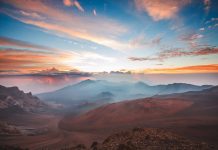
On the island of Maui, Haleakal?, or “House of the Sun,” offers two completely different worlds. The most famous experience is driving to the summit of the dormant volcano, over 10,000 feet up, to look at the sunrise from above the clouds. We’ve done it, and shivering within the pre-dawn cold is completely price it when the sky ignites with color.
- Best For: Sunrises and unique volcanic landscapes.
- Our Top Tip: You now have to make a reservation online to see the sunrise from the summit. These turn into available 60 days upfront and are mandatory for entry between 3:00 AM and seven:00 AM.
- When to Go: The weather on the summit is most stable in the course of the summer months, however the park is a year-round destination.
Beyond the summit, don’t miss the park’s coastal K?pahulu District. Here, you may hike the P?p?wai Trail through a dense bamboo forest to the bottom of the towering Waimoku Falls. It seems like a special world from the barren, Mars-like landscape of the summit crater.
American Samoa National Park, American Samoa

We need to include this one because we’ve been there, and it’s a testament to how far the US National Park system reaches. It’s the second least-visited park for a reason, it’s incredibly distant. Located deep within the South Pacific, it’s the one US national park site south of the equator.
- Best For: A real off-the-grid experience, tropical rainforests, and Samoan culture.
- Our Top Tip: Visiting this park requires serious planning. It isn’t an off-the-cuff trip. Most visitors, like us, arrive via a South Pacific cruise, but you can even fly into Pago Pago.
- When to Go: The dry season runs from May to September.
The park is spread across three different islands and protects pristine tropical rainforests, coral reefs, and necessary cultural sites. Visiting here is less about checking off sights and more about immersing yourself in a distant and exquisite a part of the world.
Best National Parks for Forests & Mountains
These parks are home to a few of the oldest living things on Earth and a few of the most dramatic mountain ranges within the country. They encourage a way of awe, reminding us of the immense power and patience of nature. They are places that feel each ancient and alive.
Great Smoky Mountains National Park, NC & TN
It might surprise you to learn that that is essentially the most visited national park within the United States, seeing more people than the Grand Canyon or Yellowstone. For me, it was actually the primary national park I ever visited. During my family’s annual snowbird pilgrimage from Canada all the way down to Florida, we’d often stop here. The hazy, “smoky” fog that hangs over the rolling Appalachian Mountains makes it a phenomenal place to explore.
- Best For: Forest hikes, waterfalls, and Appalachian culture.
- Our Top Tip: To avoid the legendary traffic in Cades Cove, consider entering the park through less-used entrances like Townsend or Cosby for a quieter experience.
- When to Go: Autumn is a spectacular time to go to for the autumn foliage, but spring also brings beautiful wildflower blooms.
With its lush forests and an abundance of rivers and waterfalls, this park is a sanctuary for hikers. It’s a special form of mountain experience in comparison with the jagged peaks out west, more intimate, green, and stuffed with history.
Sequoia & Kings Canyon National Parks, California

These two adjoining parks are a showcase of nature’s scale. In Sequoia National Park, you walk through groves of the biggest trees on the planet. Standing next to the General Sherman Tree, the world’s largest by volume, is a very humbling experience that makes you are feeling incredibly small. It’s not possible to not be moved by their ancient presence.
- Best For: Giant trees, deep canyons, and high Sierra hiking.
- Our Top Tip: Give yourself loads of driving time. The roads throughout the parks, just like the Kings Canyon Scenic Byway, are winding and slow, however the views are price it.
- When to Go: Summer and early autumn provide the perfect access to all parts of the parks, including the high-elevation trails.
Just round the corner, Kings Canyon offers a landscape that rivals Yosemite, with soaring granite cliffs and one in every of the deepest canyons in North America. Together, these parks offer each the giants of the forest floor and the grandeur of the High Sierra mountains.
Redwood National Park, California

While sequoias are the biggest trees by volume, the coast redwoods are the tallest living things on Earth. Walking through these forests is a totally different experience. The trees soar a whole lot of feet into the air, making a high cover that filters the sunshine, giving the forest floor a quiet, almost reverent feeling.
- Best For: Old-growth forest walks and scenic coastal drives.
- Our Top Tip: For a more immersive experience, get off the essential highway and take a drive on the Newton B. Drury Parkway or the Avenue of the Giants just south of the park.
- When to Go: Year-round, but be prepared for rain and fog, especially from autumn to spring.
The park is a set of federal and state parks that protect the remaining old-growth redwood forests. Hiking amongst these giants, a few of that are over 2,000 years old, seems like stepping back in time. The combination of the large trees and the nearby rugged coastline makes for a memorable visit.
Grand Teton National Park, Wyoming
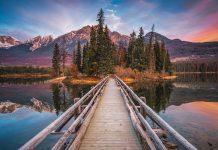
Located just south of Yellowstone, Grand Teton is usually combined with its more famous neighbour, nevertheless it absolutely stands by itself as a world-class destination. What we love concerning the Tetons is their dramatic presentation. There aren’t any foothills; the jagged peaks of the Teton Range rise abruptly from the flat floor of the Jackson Hole valley, creating an unforgettable skyline.
- Best For: Mountain photography and wildlife viewing.
- Our Top Tip: For iconic photos of the mountains reflected within the Snake River, head to Schwabacher Landing at sunrise. For the famous barn shots, Mormon Row is the place to be.
- When to Go: Autumn is our favourite time, with golden foliage, energetic wildlife, and fewer crowds than in the summertime.
This park is a haven for wildlife photographers and animal lovers. It’s the most effective places to identify moose, and we’ve seen elk, bison, and pronghorn grazing within the sagebrush flats with the magnificent peaks as a backdrop
Best National Parks for Avoiding the Crowds
These parks may not have the dramatic peaks or canyons of the others, but they provide a novel form of immersion into wild, complex ecosystems. They require a special approach and reward visitors with a way of solitude and discovery.
Everglades National Park, Florida

Covering 1.5 million acres of southern Florida, the Everglades is an enormous and subtle wetland wilderness. It’s not a landscape of grand overlooks; it’s a spot you may have to explore slowly to understand. This protected area is a UNESCO World Heritage Site, and it’s the one place on the earth where alligators and crocodiles coexist.
- Best For: Birdwatching, paddling, and unique wildlife.
- Our Top Tip: Visit in the course of the dry season (December to April). Water levels are lower, and wildlife, especially alligators and wading birds, congregates across the remaining water sources, making them much easier to see.
- When to Go: The winter dry season is by far essentially the most comfortable and best time for wildlife viewing.
While airboat tours are popular on the park’s outskirts, we discover the perfect strategy to experience the Everglades is by paddling a canoe or kayak through its mangrove tunnels and sawgrass prairies. The Anhinga Trail near the Royal Palm Visitor Center can be a improbable place for a simple walk with almost guaranteed alligator sightings.
Isle Royale National Park, Michigan
Isle Royale is one in every of the least-visited national parks, and that’s its essential draw. It’s a distant island cluster in the midst of Lake Superior, closer to Canada than to the US mainland. Dave and I even have spent a whole lot of time exploring the shores of the Great Lakes, and we will inform you that getting out to its islands is a really special experience.
- Best For: Solitude, backpacking, and backcountry camping.
- Our Top Tip: You have to be self-sufficient here. Pack out every part you pack in. The island is a real wilderness with no roads, and you may only explore it on foot or by boat.
- When to Go: The park is simply open from mid-April to October. Summer (June to September) is the perfect time to go to.
Getting here requires a multi-hour ferry or a seaplane, and when you arrive, you’re on your personal. The park is known for its isolated populations of moose and wolves. For backpackers and paddlers seeking to truly disconnect, Isle Royale offers a rare opportunity for solitude in a rugged, beautiful setting.
FAQ: Your US National Park Questions Answered
f you’re asking about popularity, essentially the most visited national park in America is Great Smoky Mountains National Park, which sees over 14 million visitors a yr. However, the “best” park is totally subjective and is dependent upon what you’re in search of, whether it’s the wildlife of Yellowstone or the hiking in Zion.
California has essentially the most national parks with a complete of nine. They include a few of the most famous names like Yosemite, Joshua Tree, and Death Valley, making it an incredible state for a national park road trip.
That’s a tricky one, as every park has its own unique qualities. We’re keen on the dramatic, jagged peaks of Grand Teton and the otherworldly hoodoos of Bryce Canyon. But the temperate rainforests of Olympic and the sheer scale of the Grand Canyon are hard to beat. The “most beautiful” is the one which connects with you essentially the most.
Excluding the distant parks in Alaska and American Samoa, Isle Royale National Park in Michigan is one in every of the least visited. Its distant location in Lake Superior means it requires a big effort to get there, nevertheless it rewards visitors with true solitude.
Absolutely. If you propose on visiting three or more parks inside a yr, the ‘America the Beautiful’ annual pass will prevent money. It’s managed by the National Park Service and the funds help maintain these incredible landscapes for future generations.
The largest national park is Wrangell-St. Elias National Park & Preserve in Alaska. At a colossal 13.2 million acres, it’s larger than your entire country of Switzerland.
So, Where Will You Go First?
After years of travelling the world, we’re continually drawn back to the incredible diversity of the US National Parks. From the deserts of the southwest to the glaciers of Alaska, these protected lands offer a lifetime of adventure.
Whether you’re planning a week-long hiking trip or a cross-country road trip, we hope this guide has given you some inspiration to your next journey. The most significant thing is to get on the market and explore. Let us know within the comments which US national park is at the highest of your list.
Escape the ordinary and discover the extraordinary! From bustling cities to serene landscapes, every journey begins with a single step—let us guide yours. Enjoy curated itineraries, hidden gems, and hassle-free bookings designed for explorers at heart. Whether it's a weekend getaway or a globe-trotting adventure, your Next unforgettable experience is just a click away.