
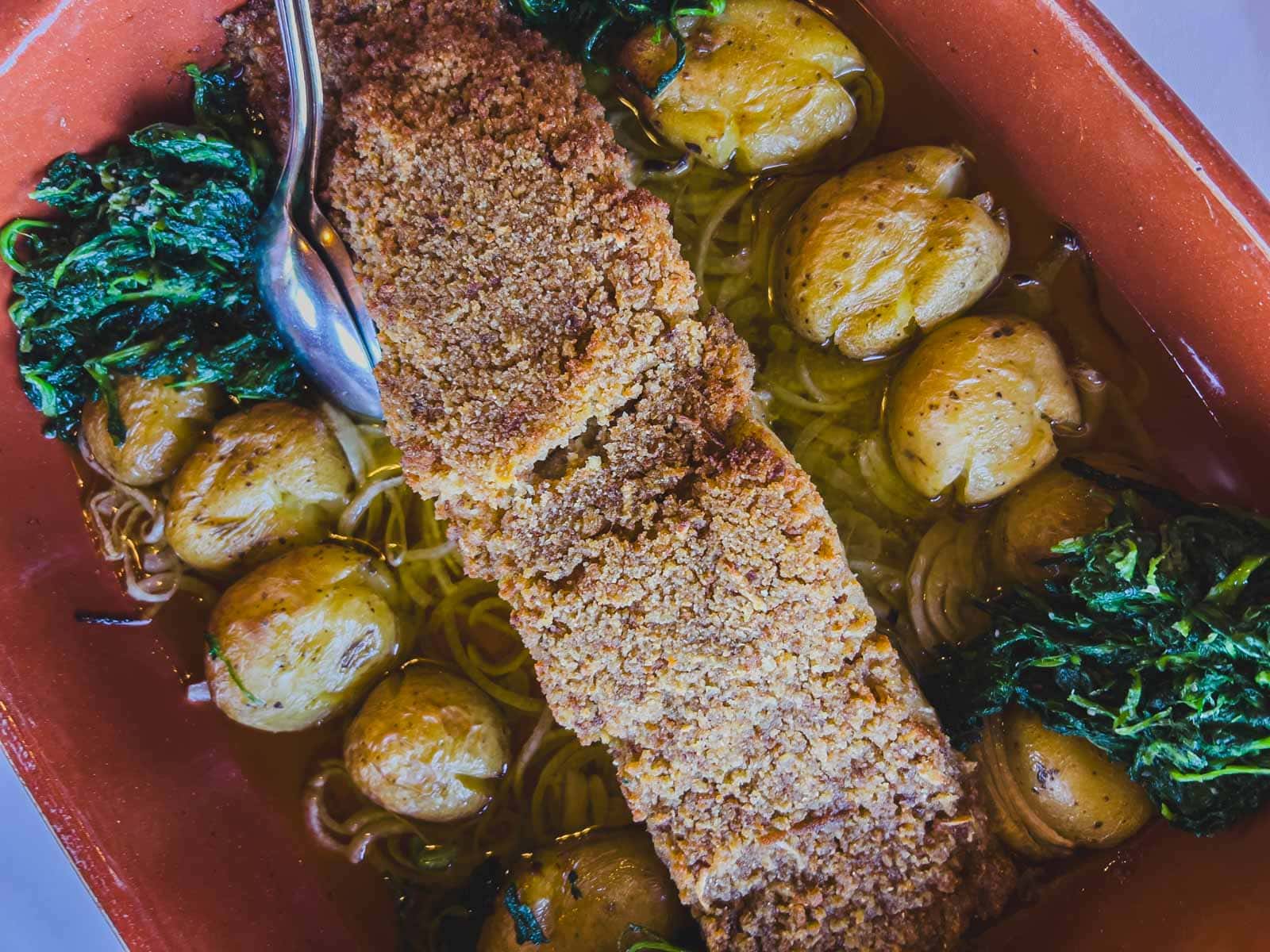
There are few places we’ve explored which are as much of a feast for the senses as Portugal. We spent two full months traveling all the country, from the sun-drenched seafood restaurants of the Algarve to the historic heart of Guimarães within the north. Our mission was easy: to eat the whole lot.
We tried food from tiny tascas in Lisbon, seaside grills serving the freshest catch, and family-run spots deep within the countryside. This guide is the results of that delicious journey. It’s our collection of the standard Portuguese dishes that you just simply should try, based on our firsthand experience of eating our way across the country.
Traditional Portuguese Food at a Glance
If you’re short on time, listed below are our top picks to assist you resolve what to eat first.
- Must-Try Dishes: Pastel de Nata, Bifana, Grilled Sardines, Caldo Verde.
- Best Seafood: Bacalhau, Cataplana de Marisco, Polvo à Lagareiro.
- Best Meat Dishes: Francesinha, Leitão Assado (Suckling Pig), Porco Preto.
- Must-Try Drinks: Vinho Verde, Ginjinha.
1. Pastel de Nata (Custard Tarts)
You can’t discuss traditional Portuguese cuisine without starting here. These bite-sized egg custard tarts are a national treasure. The pastry is impossibly flaky, shattering the moment you bite into it, giving method to a warm, creamy custard centre. They’re typically served with a sprinkle of cinnamon on top.
Dave & Deb’s Take: We’ve eaten more of those than we will count, and our rule is easy: eat them warm, preferably standing right outside the bakery. While there are famous spots in Lisbon, almost every local pastelaria has a improbable version. It’s the proper companion to a morning coffee.
2. Bacalhau (Salt Cod)
Bacalhau isn’t only a fish; it’s a Portuguese obsession. It’s said there are greater than 365 ways to organize this dried and salted cod—one for day by day of the 12 months. Historically, it was the food that sustained sailors on long voyages, but today it’s a beloved staple present in the whole lot from easy fish cakes to elaborate casseroles. WE really got a great taste of it after we were up in Guimaraes. What amazing food scene.
Dave & Deb’s Take: If you’re recent to bacalhau, the very best introduction is Bacalhau à Brás. It’s a typical Portuguese dish of shredded cod mixed with onions, scrambled eggs, and thinly fried potatoes. It’s delicious, not too fishy, and an ideal method to experience Portugal’s national dish.
3. Bifana (Pork Sandwich)

The Bifana is Portugal’s answer to the proper sandwich. It’s easy, low cost, and incredibly satisfying. The sandwich consists of thin slices of pork marinated in garlic, white wine, and spices, served on a soft, fresh bread roll. It’s the final word Portuguese comfort food.
Dave & Deb’s Take: The best Bifanas we’ve had are from tiny, no-frills spots where you’ll be able to hear the pork sizzling on the griddle. Don’t be shy with the mustard, a squeeze of it cuts through the richness of the pork perfectly. It’s the perfect low cost and cheerful lunch.
4. Grilled Sardines (Sardinhas Assadas)

Freshly grilled sardines are a juicy, easy pleasure and a staple of Portuguese cuisine. Historically a dish of the lower classes resulting from their affordability, they at the moment are a beloved snack or light lunch across the country. The secret is the slow-grilling over charcoal, which keeps the fish moist and filled with flavour.
Dave & Deb’s Take: The best sardines we’ve ever had were from a tiny, no-name grill arrange on a side street within the Alfama district of Lisbon in the course of the St. Anthony Festival in June. The whole neighbourhood smelled of grilled fish and charcoal. You eat them along with your hands, placing the sardine on a slice of bread to take in the juices. Don’t be afraid to get messy; it’s all a part of the experience.
5. Piri-Piri Chicken

This is certainly one of Portugal’s most famous culinary exports, and for good reason. It’s so rather more than simply the version you discover at chain restaurants. Authentic Portuguese Piri-Piri chicken is spatchcocked, marinated in a flavourful mixture of chili, garlic, olive oil, and lemon, after which grilled over charcoal until the skin is crispy and the meat is incredibly juicy.
Dave & Deb’s Take: Every restaurant has its own secret Piri-Piri sauce recipe, and a part of the fun is trying different versions. We found the very best spots are often unassuming, local places with an enormous charcoal grill out front. It’s typically served with easy fries and a basic salad, which is all you have to accompany the star of the show.
6. Caldo Verde (Green Soup)
Caldo Verde is the final word Portuguese comfort food. This warming and flavourful soup originates from the northern Minho region but is now found on menus all across the country. It’s an easy, rustic soup constructed from potatoes, thinly shredded collard greens (or kale), and slices of smoky chouriço sausage, all brought along with a generous drizzle of olive oil.
Dave & Deb’s Take: This was our go-to starter on cool evenings in Porto. It’s hearty without being heavy, and the mix of the earthy greens and the smoky sausage is ideal. It’s an easy dish, but when it’s done right, it’s probably the most satisfying things you’ll be able to eat in Portugal.
7. Francesinha (The Queen of Sandwiches)
This isn’t only a sandwich; it’s an event. Hailing from Porto, the Francesinha is a beast of a meal, layered with sausage, ham, and steak, then smothered in melted cheese and a wealthy, spicy, beer-based tomato sauce. It’s messy, decadent, and absolutely unforgettable. Perfect when accompanied by a side of french fries.
Dave & Deb’s Take: We made a special trip to Porto simply to try an authentic Francesinha, and it lived as much as the hype. It’s arguably the preferred Portuguese food. Our advice? Come hungry, and don’t wear a white shirt. You’ll find it on menus in Lisbon, however it’s value waiting to try it in its hometown of Porto.
8. Carne de Porco à Alentejana (Pork with Clams)

This is the unique Portuguese surf and turf, and it’s an excellent combination of flavours. The dish combines tender chunks of pork marinated in wine and garlic with fresh clams, all served over a bed of fried potatoes and topped with fresh cilantro. It originated within the Algarve region but is now a beloved classic across the country.
Dave & Deb’s Take: The first time we saw this on a menu, we were a bit skeptical concerning the pork and clam combo, however it just works. The salty flavour of the clams perfectly complements the wealthy pork, and the sauce is incredible for dipping your bread in. It’s a must-try for any adventurous foodie.
9. Arroz de Marisco (Seafood Rice)

While it’d appear like a Spanish paella, Arroz de Marisco is a uniquely Portuguese dish. The key difference is that the rice is cooked in a flavourful broth until it’s much looser and more stew-like than a paella. It’s filled with a generous amount of seafood, typically including prawns, mussels, clams, and squid.
Dave & Deb’s Take: This is a improbable dish to share. It normally involves the table in a big clay pot, steaming and fragrant. We love the soupy consistency of the rice, which is filled with the flavour of the ocean. It’s an ideal meal for a protracted, lazy lunch with a bottle of Vinho Verde.
10. Bitoque (Steak and Egg)

Bitoque is a classic Portuguese comfort meal you’ll find in almost every local restaurant or tasca. It’s an easy but satisfying dish of a thin-cut steak (either pork or beef) that’s pan-fried in garlic and butter, then topped with a runny fried egg. It’s almost all the time served with a side of french fries and rice.
Dave & Deb’s Take: This was our go-to lunch on days when we wanted something quick, hearty, and reliable. It’s a no-frills dish, however it’s all the time delicious. The better part is breaking the fried egg yolk and letting it run over the steak and fries. It’s easy, classic Portuguese cooking at its best.
11. Arroz de Pato (Duck Rice)

This is a classic Portuguese comfort food dish. Arroz de Pato, or duck rice, is a wealthy and savory dish where the rice is cooked in a flavorful broth constructed from simmering the duck itself. The tender, shredded duck meat is then mixed into the rice, which is usually topped with slices of smoky chouriço and baked until the highest is barely crispy.
Dave & Deb’s Take: We had this on a cool evening in a small, family-run restaurant and it was the proper hearty meal. It’s much richer and more flavourful than an ordinary rice dish. The crispy chouriço on top adds the proper salty, smoky contrast to the tender duck.
12. Polvo à Lagareiro (Octopus with Olive Oil)
If you like seafood, this dish is an absolute must-try. Tender octopus is boiled after which roasted with loads of garlic and a generous amount of Portuguese olive oil, and typically served with small, roasted potatoes which were smashed to take in all of the delicious oil.
Dave & Deb’s Take: We were a bit hesitant about octopus before our trips to Portugal, but this dish completely converted us. When it’s cooked well, the octopus is incredibly tender, not chewy in any respect. It’s an easy dish that basically lets the high-quality ingredients shine. It’s certainly one of our go-to orders each time we’re back in Portugal.
13. Bolinhos de Bacalhau (Codfish Cakes)
These are certainly one of Portugal’s hottest snacks or appetizers. Bolinhos de Bacalhau are small, deep-fried fritters constructed from a combination of salted cod, potatoes, eggs, and fresh parsley. They are crispy on the surface and soft and fluffy on the within.
Dave & Deb’s Take: You’ll find these in all places, from small cafes to high-end restaurants. They’re the proper snack to have with a chilly beer on a sunny afternoon. We love how they’re an easy, delicious bite of Portugal’s most famous fish.
14. Cozido à Portuguesa (Portuguese Stew)
This is a carnivore’s dream and a real taste of typical Portuguese food. Cozido is a hearty boiled stew filled with an enormous assortment of meats and vegetables. A typical Cozido can include beef, pork, chicken, and various sausages like chouriço and morcela (blood sausage), all slow-cooked with vegetables like potatoes, carrots, and cabbage.
Dave & Deb’s Take: Be prepared: this just isn’t a light-weight meal. It’s an enormous platter of food, meant to be shared. It’s a improbable method to sample an enormous number of Portuguese meats and sausages multi function go. It’s a classic Sunday family meal for a reason.
15. Cataplana de Marisco (Portuguese Seafood Stew)
This iconic dish from the Algarve region is as much concerning the presentation because it is concerning the flavour. It’s a seafood stew cooked and served in a clam-shaped copper pan called a cataplana. The pan acts like a steamer, locking in all of the flavours of the fresh seafood, which generally includes clams, prawns, and fish, cooked in a fragrant broth of tomatoes, white wine, and herbs.
Dave & Deb’s Take: This was the classic Portuguese dish that we had heard about from our friends. So, after all we needed to try it. We had this at a seaside restaurant in Lagos, and it was an ideal hearty meal. The moment they open the cataplana at your table and the steam billows out is improbable. It’s a must-do experience while you’re within the Algarve.
16. Peixinhos da Horta (Fried Green Beans)

Don’t let the straightforward description idiot you; that is probably the most addictive snacks in Portugal. The name literally translates to “little fishes from the garden,” and the dish consists of green beans which are battered and deep-fried until crispy. It’s believed that this dish was the inspiration for what the world now knows as Japanese tempura, introduced by Portuguese traders centuries ago.
Dave & Deb’s Take: We first tried these at a little bit tapas bar and couldn’t stop ordering them. They’re the proper appetizer. The batter is light and crispy, and the green bean inside is perfectly tender. It’s an easy, good dish and an amazing vegetarian option.
17. Picanha

While originally a famous Brazilian cut of beef, Picanha has been wholeheartedly adopted by Portugal. This specific cut, the highest sirloin cap, is understood for its incredible tenderness and a thick layer of fat that bastes the meat because it grills over charcoal, making it unbelievably juicy and flavourful.
Dave & Deb’s Take: If you see Picanha on the menu and also you’re a steak lover, order it. It’s often served simply with fries and black beans. The quality of the meat in Portugal is improbable, and that is among the finest ways to experience it.
18. Feijoada (Bean Stew)
Another dish with strong Brazilian ties, Feijoada is a wealthy and hearty stew of black beans and various cuts of pork and beef. While historically made with cheaper cuts, it’s now a beloved comfort food. It’s a slow-cooked, soulful dish that’s perfect for a giant, satisfying meal.
Dave & Deb’s Take: This is a real taste of rustic, hearty cuisine. It’s a heavy dish, so it’s best enjoyed on a cooler day. We found it’s an amazing meal to share, often served with rice and orange slices, which help cut through the richness of the stew.
19. Caldeirada de Peixe (Fish Stew)

This is the quintessential Portuguese fisherman’s stew. A Caldeirada is a stupendous, layered stew made with quite a lot of fresh fish and potatoes, all cooked together in a flavourful broth of tomatoes, bell peppers, and herbs. The fantastic thing about the dish is that it traditionally uses regardless of the fishermen caught that day.
Dave & Deb’s Take: We had this in a small fishing village within the Algarve, and it was incredible. It’s just like a French Bouillabaisse but heartier and more rustic. It’s a improbable method to sample a wide selection of local fish multi function go.
20. Ovas (Fish Roe)
For the truly adventurous eater, Ovas is a Portuguese delicacy constructed from fish roe (eggs). The entire egg sack, typically from a gray mullet, is boiled after which served chilled, often sliced and dressed simply with olive oil, vinegar, and onions alongside boiled potatoes.
Dave & Deb’s Take: We should admit, this one was a challenge for us at first, but we were determined to try it. The texture is probably the most unique part—very smooth and silky. It’s a really traditional and historic dish, and in case you’re trying to step outside your culinary comfort zone, that is the one to try.
21. Serra da Estrela Cheese
If you’re a cheese lover, you’ve gotten to try Queijo Serra da Estrela. This is Portugal’s most famous cheese, hailing from the Serra da Estrela mountains. It’s a soft, gooey sheep’s milk cheese that’s so creamy you frequently eat it by scooping it out with a spoon. It has a robust, complex flavour that is totally unforgettable.
Dave & Deb’s Take: We first tried this Portuguese cheese at a market in Lisbon, and it was a revelation. It’s served at room temperature, and the rind is cut off the highest so you’ll be able to dip bread right into the gooey center. It’s incredibly wealthy and flavourful. Paired with a glass of red wine, it’s an ideal appetizer.
22. Pão de Deus (God’s Bread)
This is a well-liked Portuguese bread roll, and its name literally translates to “God’s Bread.” It’s a soft, brioche-like bun with a delicious, sweet shredded coconut topping that gets toasted during baking. It’s a staple in Portuguese bakeries (pastelarias).
Dave & Deb’s Take: This was our go-to breakfast on many mornings in Portugal. It’s not overly sweet, and the soft bread with the marginally crispy coconut topping is an ideal combination with a robust coffee. It’s an easy, delicious method to start your day like an area.
23. Bola de Berlim
These are the Portuguese version of a Berliner or a Bismark doughnut, and so they are incredibly popular, especially on the beaches in the summertime. They are fluffy, deep-fried doughnuts, rolled in sugar, and traditionally crammed with a sweet egg yolk cream (creme de ovos).
Dave & Deb’s Take: You’ll see vendors walking the beaches within the Algarve selling these from coolers, and it’s best to absolutely buy one. They are the proper beach snack. While the standard egg cream is the classic, we also love those crammed with chocolate.
24. Cebolada
Cebolada isn’t a standalone dish, but fairly a flavorful onion-based stew or sauce that could be a cornerstone of Portuguese home cooking. It’s made by slow-cooking onions with tomatoes and garlic until they’re soft and sweet. It’s often served as a base for stewed or pan-fried fish and meat dishes.
Dave & Deb’s Take: We had this served with a stupendous piece of grilled tuna, and it was improbable. The sweetness of the slow-cooked onions and tomatoes is the proper complement to the fresh fish. It’s an amazing example of how easy, high-quality ingredients are the guts of Portuguese cuisine.
25. Linguica (Portuguese Smoked Sausage)

Linguica is a flavourful, smoke-cured pork sausage seasoned with garlic and paprika. It’s a staple within the Portuguese eating regimen and is incredibly versatile. It may be grilled, fried, or added to stews and rice dishes so as to add a deep, smoky flavour.
Dave & Deb’s Take: This is spicier and more flavourful than a typical chorizo. We find it irresistible grilled over an open flame. You’ll often see it served as an easy appetizer, where it’s dropped at the table in a flaming ceramic dish. It’s a little bit of theatre and incredibly delicious.
26. Port Wine
You can’t go to Portugal without trying its most famous drink. Port is a sweet, fortified wine produced exclusively within the Douro Valley in northern Portugal. It’s typically served as a dessert wine and is available in several varieties, from wealthy, fruity ruby ports to complex, nutty tawny ports.
Dave & Deb’s Take: We spent a couple of days exploring the Douro Valley, and it’s probably the most beautiful wine regions on the earth. The best method to experience Port is to go to certainly one of the Port lodges in Porto for a tasting. It’s a improbable method to learn concerning the history and different kinds of this iconic Portuguese drink.
27. Vinho Verde (Green Wine)
Don’t let the name idiot you; “green wine” isn’t actually green in color. It’s a young wine (hence “green”) from the Minho region within the north, and it’s light, crisp, and infrequently has a slight effervescence. It’s the proper refreshing drink for a sunny afternoon.
Dave & Deb’s Take: We drank Vinho Verde almost day by day in Portugal. It’s incredibly inexpensive and pairs perfectly with fresh seafood. It’s light, easy to drink, and quintessentially Portuguese.
28. Ginjinha (Cherry Liqueur)
Ginjinha (or Ginja) is a well-liked Portuguese liqueur made by infusing sour cherries (ginja berries) in a brandy called aguardente. It’s a sweet, strong liqueur that could be a beloved local drink, especially in Lisbon.
Dave & Deb’s Take: The best method to do this is from certainly one of the tiny, historic Ginjinha bars in Lisbon. For about one Euro, you get a shot served in a small glass, often with a cherry in the underside. You may ask for it to be served in a small chocolate cup, which is a fun and delicious method to enjoy it.
Planning Your Food Tour of Portugal
- Best Food Tours in Lisbon & Porto: A food tour is among the finest ways to get an introduction to Portuguese cuisine. We recommend taking a tour in your first day to get your bearings and discover some local gems.
- Tips for Dining in Portugal:
- The bread, olives, and other small plates the waiter brings firstly of the meal (the couvert) usually are not free. If you don’t want them, just politely say “no, thanks.”
- Lunch is often the most important meal of the day, and lots of restaurants offer an amazing value prato do dia (dish of the day).
- Dinner is eaten late in Portugal, normally after 8:00 PM.
FAQ: Food in Portugal
The national dish of Portugal is Bacalhau (dried and salted cod). It is claimed that there are greater than 365 ways to cook it, one for day by day of the 12 months.
A typical Portuguese breakfast is light and easy, often consisting of fresh bread with butter, cheese, or jam, and a coffee (like an espresso or a galão – coffee with milk). The Pão de Deus can be a well-liked breakfast alternative.
Generally, traditional Portuguese food just isn’t very spicy. The famous Piri-Piri sauce is the most important exception, and it will likely be served on the side so you’ll be able to add as much heat as you want.
So, Which Dish Will You Try First?
After spending two full months eating our way from the sunny coast of the Algarve to the historic hills of the north, it’s unattainable for us to select only one favourite Portuguese dish. What we truly fell in love with was the honesty of the food.
Whether it was an easy bowl of Caldo Verde on a cool night in Porto or fresh grilled sardines at a festival in Lisbon, the main target was all the time on incredible, fresh ingredients prepared with care. But if we had to select one perfect food memory, it could be sharing a steaming Cataplana de Marisco at a tiny seaside restaurant. The moment the waiter opened that copper pan at our table and the fragrant steam of seafood, wine, and herbs filled the air… that, to us, is the taste of Portugal.
This country’s cuisine is a delicious adventure, and we hope this guide has inspired you to try as a lot of these traditional Portuguese dishes as you’ll be able to.
Escape the ordinary and discover the extraordinary! From bustling cities to serene landscapes, every journey begins with a single step—let us guide yours. Enjoy curated itineraries, hidden gems, and hassle-free bookings designed for explorers at heart. Whether it's a weekend getaway or a globe-trotting adventure, your Next unforgettable experience is just a click away.